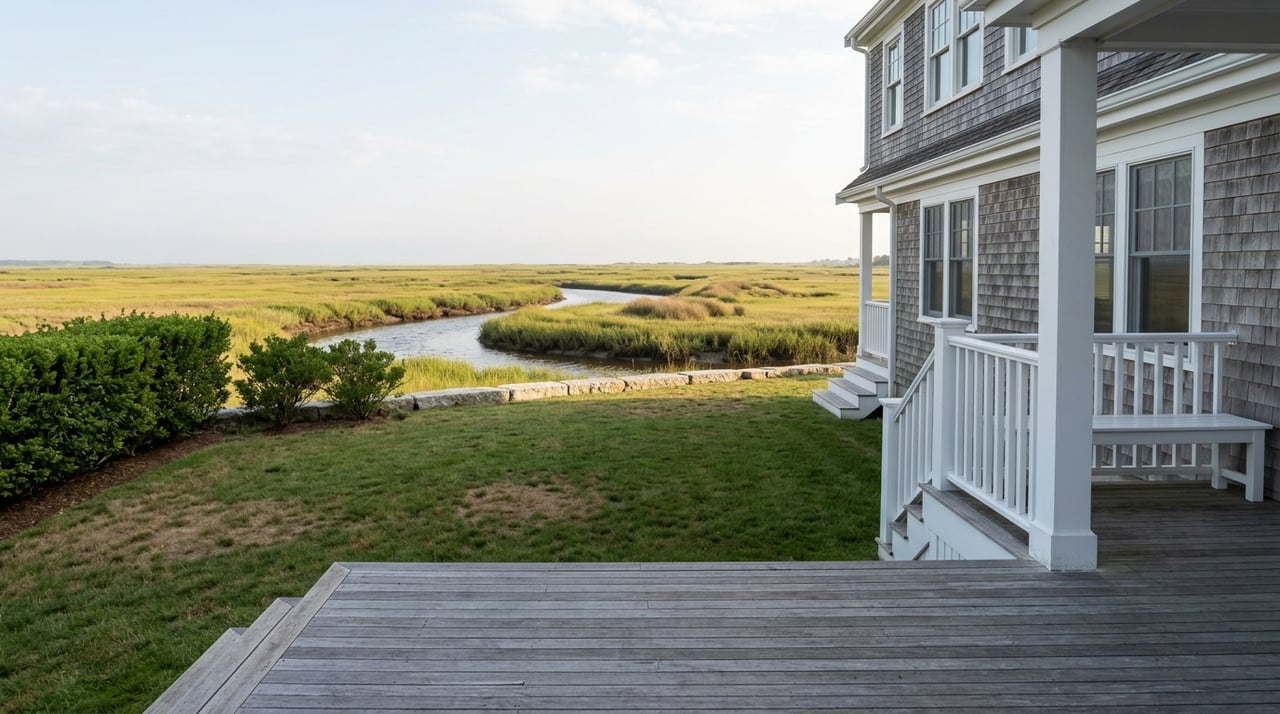
Living Along Marshfield’s Rivers And Marshes
June 4, 2026
June 4, 2026
If you are drawn to the South Shore for the water, Marshfield offers a version of coastal living that feels both scenic and deeply tied to daily life. Here, rivers, tidal marshes, and shoreline shape how you boat, fish, commute, plan for storms, and choose the right home. If you are thinking about buying or selling in this part of town, understanding that relationship can help you make smarter decisions with more confidence. Let’s dive in.
Marshfield’s identity is closely tied to the Green Harbor, South, and North Rivers, all of which are wrapped in extensive salt-water tidal marshes. Town planning materials note that this landscape helped define the area from the beginning, and that the natural setting remains a major reason people choose to live here or visit.
The town also has roughly five miles of Atlantic shoreline, which adds another layer to everyday life. The ocean can moderate temperatures, often making summers cooler and winters a bit warmer than in nearby inland communities. For many buyers, that blend of river, marsh, and coast is what makes Marshfield feel distinct.
Marshfield’s waterfront story also has deep roots. Local history materials describe commercial fishing in the area as far back as 1623, and more than 1,000 ships were built along the North River in the 19th century. Today, that history still shows up in the town’s strong connection to boating, fishing, shellfishing, and seasonal coastal living.
Living along Marshfield’s rivers and marshes is not only about the view from your deck. It is also about the pace and patterns of a place where tides, weather, and seasons matter more than they do in many inland neighborhoods.
In summer, Marshfield becomes much busier, especially near beach and waterfront areas. Town planning documents describe a large seasonal influx, including renters and summer homeowners, which means the energy of the area can shift noticeably as the weather warms up.
At the same time, parts of Marshfield keep a quieter, more nature-forward feel. The English Salt Marsh Wildlife Management Area, which fronts portions of the North and South Rivers, is mostly salt marsh and is best accessed by boat. That setting supports fishing and offers a very different experience from more active harbor and boat-launch areas.
For many homeowners, Marshfield’s waterways are part of everyday recreation. The Ridge Road boat ramp serves South River boaters and also provides public access for paddle craft, while the Green Harbor boat ramp offers direct ocean access to Massachusetts Bay and Cape Cod Bay.
That means your location within Marshfield can shape the kind of waterfront lifestyle you enjoy most. If you want easier access for boating and paddling, South River and Green Harbor areas may feel especially appealing. If you prefer a more conservation-oriented backdrop, the North River side may offer a quieter experience.
Fishing and shellfishing are also part of the local waterfront culture. State shellfish classification maps identify shellfish areas in Green Harbor, North River, and South River, reflecting how connected these waters are to Marshfield’s coastal character.
The marshes are beautiful, but they also do important work. Town planning materials say wetlands absorb floodwaters, improve stormwater management, and reduce erosion. Local mitigation planning even describes salt marshes as an essential first line of defense against storms.
That matters for homeowners because the natural setting is part of the town’s resilience. Marshes and estuaries also provide habitat, support water quality, and help retain floodwaters. In a coastal town like Marshfield, those benefits are not abstract. They can directly affect how an area handles heavy rain, coastal storms, and changing sea levels.
There is also a long-term planning side to this. State guidance notes that tidal marshes can eventually drown if sea-level rise outpaces their ability to build elevation, and local planning materials say these systems need room to migrate landward over time. For buyers and sellers, that adds another reason to pay attention to location-specific conditions and regulations.
A marsh-view or river-adjacent property can offer a lifestyle that is hard to match. You may get beautiful light, open views, boating access, and a strong sense of place. But those benefits come with a different set of questions than you would ask for a typical inland home.
Flood exposure is one of the biggest considerations. Marshfield’s hazard plan identifies flooding as the town’s most prevalent serious natural hazard, driven by hurricanes, nor’easters, severe rainstorms, and thunderstorms. Because many of the town’s rivers and waterways are tidally influenced for their full length, flooding can also push inland and affect areas beyond the immediate coastline.
The town’s MVP findings add another important point: 60 percent of single-family homes in flood zones were uninsured at the time of the study. For buyers, that makes flood insurance, elevation, drainage, and storm exposure key parts of due diligence.
Here are a few practical items to review when you are considering a home near Marshfield’s rivers or marshes:
In Marshfield, waterfront ownership often comes with added oversight, especially near wetlands, beaches, and tidal flats. Town regulations treat land within 100 feet of coastal beaches or tidal flats as important for flood control, erosion control, storm-damage prevention, fisheries, shellfish, wildlife, recreation, and aesthetics.
The town also uses a Coastal Wetlands District intended to protect residents whose land is subject to seasonal or periodic tidal flooding. If you are comparing homes, this can affect what you may be able to build, expand, or alter over time.
If a property includes or may one day include a dock, that brings another layer of review. Town regulations say new or modified dock projects must be coordinated with the Harbormaster and may not impede channels, navigation, or public ramps and landings. In other words, waterfront ownership can be rewarding, but it usually requires more careful planning.
One of the most important mindset shifts in Marshfield is learning to think with the water, not just next to it. Town planning documents describe the coast as dynamic and constantly changing in response to winds, waves, tides, seasonal variation, sea-level rise, and human intervention.
That shows up clearly in Green Harbor, where tide gates are managed to support marsh health while still limiting upstream flood risk. The town is also pursuing jetty and entrance-channel improvements aimed at reducing shoaling and strengthening coastal resiliency.
For homeowners, the takeaway is simple. Marsh-front and river-adjacent living often means paying closer attention to high tides, storm prep, and longer-term maintenance than you might with a home farther inland.
Marshfield’s housing stock is still dominated by single-family detached homes, and town housing materials say a large share of that stock was built before 1970. In coastal sections, the pattern of single-family homes on smaller lots remains common, even as many former seasonal homes have been converted to year-round use.
Town housing data also notes 1,088 vacant seasonal housing units, or 10.1 percent of the housing stock. That helps explain why some parts of Marshfield feel different in July than they do in January.
For buyers, this mix can create a wide range of opportunities. Some homes are clearly designed for full-time living, while others reflect the town’s long history as a seasonal destination. Knowing how a specific micro-location functions year-round can be just as important as the home itself.
If you are selling a home along Marshfield’s rivers or marshes, your property story matters. Buyers are often drawn to features like water access, open marsh views, boating convenience, and the calmer temperatures that come with coastal living. But they also want clarity around the practical side of ownership.
That means strong preparation can make a real difference. Clear documentation around flood insurance, elevation, drainage improvements, maintenance, and any waterfront approvals can help buyers feel more comfortable moving forward.
Presentation matters too. In a market where lifestyle drives interest, thoughtful photography, staging, and marketing can help buyers understand not just the home, but the experience of living there. That is especially important for distinctive coastal properties where setting and context carry real value.
If you are trying to decide whether a marsh-front home in Marshfield is the right fit, or how to position one for sale, local context makes all the difference. Working with someone who understands Marshfield’s coastal micro-markets, seasonal rhythms, and property-specific tradeoffs can help you move forward with a clearer plan. When you are ready for that kind of guidance, connect with Kristin Dewey.
Stay up to date on the latest trends in real estate.

November 19, 2026
November 12, 2026
November 5, 2026
October 29, 2026
October 22, 2026
October 15, 2026
October 8, 2026
October 1, 2026
September 24, 2026
Let us learn more about how I can help. My goal is to be your Real Estate Consultant for Life!