
Everyday Life Around Duxbury Beach And Bay
June 18, 2026
June 18, 2026
What does everyday life near Duxbury Beach and Bay actually feel like when the summer crowds are not the whole story? If you are thinking about living in Duxbury, you are probably looking for more than a postcard view. You want to understand how the shoreline shapes routines, housing, access, and even the pace of daily life. This guide walks you through what makes this part of Duxbury distinct and what to expect if coastal living here is on your radar. Let’s dive in.
Duxbury sits on Cape Cod Bay about 35 miles south of Boston, and the town describes itself as a primarily residential community with a village atmosphere. That matters because life near the water here is not built around a dense resort setting. Instead, the beach, bay, marshes, and neighborhoods work together as part of a year-round residential town.
Duxbury Beach plays a big role in that identity. According to the town’s open-space planning materials, it is a 7.5-mile barrier beach that helps protect Duxbury Bay, marshlands, tidal flats, shellfish farming areas, commercial property, and residential neighborhoods. In simple terms, the beach is both a scenic backdrop and a working part of the local coastal system.
That balance shows up in everyday decisions. Living near the shoreline in Duxbury means enjoying access to water and open views while also seeing how conservation, groundwater protection, and stormwater planning are woven into town life. The result is a coastal setting that feels beautiful, active, and carefully managed.
For many people, Duxbury Beach is the first thing that comes to mind. It is a defining local feature, but day-to-day beach use comes with systems and routines that residents quickly learn. That structure is part of what keeps access functioning while protecting the shoreline.
The town notes that walk-on access is available through pedestrian paths. Vehicle access to the OSV back road requires a town permit that is issued year-round, and crossover access can open or close depending on tides, weather, and protected bird activity.
That means your beach routine may vary by season and by daily conditions. In summer, public-facing amenities are more active, while in the off-season the beach experience tends to feel quieter because parking, crossover use, and services scale back.
Duxbury Beach Park adds practical conveniences that shape the warmer months. The park offers seasonal parking, a snack bar, comfort and sanitation stations, a guarded swimming area, and ADA accessibility. It also lists a summer schedule of 9 a.m. to 8 p.m., weather permitting.
If you picture easy summer afternoons by the water, these details matter. They help explain why beach life in Duxbury feels organized rather than improvised, especially during the busiest part of the year.
One of the clearest examples of local stewardship is how beach access changes around nesting birds. Duxbury Beach Reservation identifies the beach as a vital nesting ground for the threatened piping plover, and the town notes that protected avian activity can affect crossovers and beach road access.
For residents, this is not a side note. It is part of what everyday shoreline living looks like in Duxbury. Access and conservation exist side by side, and that shapes expectations from the start.
While the beach gets much of the attention, Duxbury Bay is just as important to daily life. The bay and surrounding salt marshes support boating, sailing, kayaking, paddleboarding, fishing, and wildlife viewing. Town planning materials also note that Duxbury Bay connects directly with Kingston and Plymouth bays, placing it within a broader South Shore marine environment.
This gives life near the bay a different rhythm than beachgoing alone. The water is not only a place to sit beside. It is also part of recreation, town services, and long-standing local uses that continue throughout the year.
The town’s Harbormaster Department is deeply connected to bay life. It handles search and rescue, boating emergencies, boating-law enforcement, mooring waitlists, navigational assistance, shellfish management, and maintenance of the town pier.
If you are considering a home near the bay, this is useful context. Waterfront living here includes systems that support boating and shellfishing, not just views and access points.
Shellfishing is woven into Duxbury’s waterfront identity. The town’s shellfish guide requires permits, sets seasonal rules, and allows closures in response to contamination or heavy rainfall. The open-space plan also states that shellfish farming takes place on 82 acres of leased tidal flats and that the bay supports oysters, quahogs, soft-shell clams, mussels, razor clams, and sea clams.
That combination of tradition and regulation says a lot about Duxbury. The bay is actively used, but it is also closely monitored and managed.
Duxbury Bay Maritime School is a major part of the local waterfront scene. It offers junior and adult sailing, rowing, paddlesports, marine science and fishing, power boating and tours, and adaptive sailing.
For buyers looking at Duxbury as a lifestyle move, this kind of waterfront programming adds real value to daily life. It shows that the bay is not just visible from town. It is part of how people spend time and build routines around the water.
Housing near Duxbury Beach and Bay tends to feel more spacious and established than what you might find in a denser coastal destination. Town materials report that most parcels are one acre or larger and that detached single-family homes make up about 83 percent of the housing stock. That supports a low-density residential pattern with room between homes.
For buyers, that often translates to a quieter and more grounded neighborhood feel. For sellers, it helps explain why location, lot setting, and presentation can carry significant weight in the market.
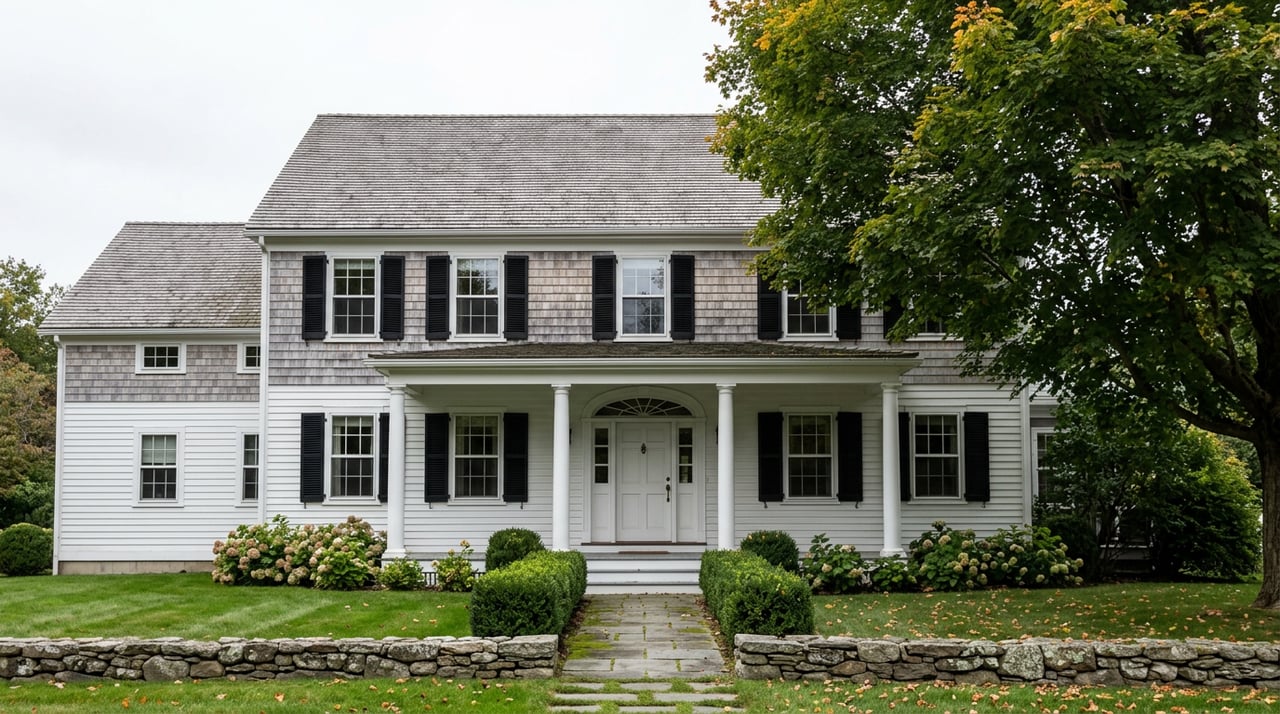
Duxbury’s design guidance shows a broad mix of home styles, including Cape, Federal, Georgian, Saltbox, Garrison Colonial, Shingle Style, Victorian, Arts and Crafts, contemporary, and beach-style contemporary homes. The town also notes that traditional New England forms work well for new construction in Duxbury.
This creates visual variety without losing the town’s coastal New England identity. In waterfront-adjacent areas, homes often feel tied to place rather than built to a single trend.
Historic waterfront-adjacent areas such as Powder Point and Standish Shore are part of Duxbury’s historic nucleus. Local history sources note that some of the area’s earliest summer cottages were clustered there, which helps explain why these areas can feel older and more layered than a newer coastal subdivision.
That sense of history is part of the appeal for many buyers. It also means home searches in Duxbury often benefit from a close look at property condition, lot context, and how each home fits into its immediate setting.
A signature detail of shoreline life in Duxbury is Powder Point Bridge. Town history describes it as about a half-mile long and reputedly the longest wooden bridge in the country.
It is more than a landmark. It helps connect the everyday experience of moving between town and beach, and it adds to the character that makes Duxbury feel distinct within the South Shore.
Coastal living in Duxbury comes with tradeoffs that are important to understand. The town identifies tidal flooding, storm surge, or erosion concerns in areas such as Snug Harbor, Powder Point, Gurnet Road, Marshall Street, Harrison Street, and Bay Road. Town materials also note that most homes rely on septic systems and that groundwater protection is a major land-use priority.
That does not take away from the appeal of living near the water. It simply means that buying or owning here often involves a more detailed understanding of site conditions, environmental constraints, and local regulations.
In many ways, that is the real theme of everyday life around Duxbury Beach and Bay. You get scenic shoreline access, an active bay, historic character, and a strong sense of place. You also live in a town that treats stewardship, permits, and long-term coastal planning as part of normal daily life.
If you are exploring a move to Duxbury or preparing to sell a home near the beach or bay, local context matters. From lot setting and access patterns to presentation and property story, coastal homes here benefit from a thoughtful, hands-on approach. When you are ready to talk through Duxbury’s micro-markets with a local advisor, connect with Kristin Dewey.
Stay up to date on the latest trends in real estate.

November 19, 2026
November 12, 2026
November 5, 2026
October 29, 2026

October 22, 2026

October 15, 2026

October 8, 2026

October 1, 2026
September 24, 2026
Let us learn more about how I can help. My goal is to be your Real Estate Consultant for Life!